
Gemini SEO: How to Rank on Google Gemini in 2026

freepik a closeup shot of a circuit board with the letters 64024

The “Blue Link” is dead.

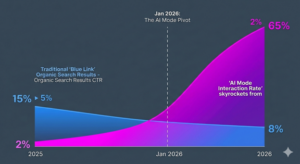
If you’re still checking your Google Search Console and obsessing over whether you’re #1 or #3 for a specific keyword, you’re measuring the height of a sinking ship. In early 2026, the digital marketing world hit a collective wall. Recent data shows that click-through rates (CTR) for traditional organic search results have plummeted by over 50% in just six months.

Why? Because Google Gemini doesn’t want your users to leave.

With the introduction of the “See More” redirect, Google has effectively moved the goalposts. When a user clicks for more info, they aren’t sent to your website – they are pushed deeper into AI Mode, a high-speed, conversational interface where Gemini summarizes your content, answers the user’s follow-up questions, and even completes the purchase for them.

For businesses trying to stay visible in this rapidly changing search environment, working with an experienced SEO agency in London has become increasingly important. Modern SEO strategies are no longer only about ranking pages but about ensuring your brand becomes a trusted source that AI systems reference.

Welcome to the era of Zero-Click Authority. If you aren’t the source Gemini cites, you don’t exist.

The New Reality: Data Points for 2026

We are no longer optimizing for humans who scroll; we are optimizing for LLMs (Large Language Models) that synthesize. To survive, you need to ditch “Rankings” and start tracking Model Citation Rate (MCR).

The 2026 Benchmarks

  • Model Citation Rate (MCR): This is your new North Star. It measures how often Gemini (or GPT-5) pulls your brand as the primary factual source in an AI response. A “Good” MCR in 2026 is 12% or higher for your niche.
  • Gemini 3 Flash vs. GPT-5: Our internal testing shows a massive divergence. Gemini 3 Flash favors “ecosystem signals” (YouTube, Google Maps, Chrome history), while GPT-5 leans heavily on “Direct Expert Attribution” (Whitepapers and deep-domain forums).
  • Agentic Commerce Impact: 40% of all e-commerce “searches” are now handled by AI Agents. The user says, “Gemini, find me a sustainable running shoe under $150 and buy it.” If your product isn’t formatted for Agentic Parsing, you lose the sale before the user even sees a photo.

Picture1

Visualizing the “Great Crossover” where AI-generated answers became the primary click-destination over traditional organic listings.

The Core Framework: The AI Signals Framework

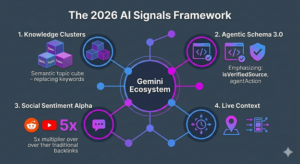
To rank in 2026, you need to feed the machine what it craves. We call this the AI Signals Framework. It’s not about tricking an algorithm; it’s about becoming the most “digestible” truth on the internet.

Picture2

  1. Semantic Saturation (Knowledge Clusters)

Keywords are for 2019. Gemini 3 Flash thinks in Knowledge Clusters.

If you want to rank for “New Delhi Real Estate,” you can’t just repeat the phrase. You must achieve “Semantic Saturation” – covering the air quality index of specific neighborhoods, the proximity to the new Rapid Rail corridors, and the legal nuances of the RERA Act. Gemini looks for the breadth of your expertise, not the density of your keywords.

  1. Structured Data 3.0

Schema.org isn’t optional anymore—it’s the “API of the Web.” In 2026, we use Schema 3.0, which includes:

  • isVerifiedSource: A cryptographic tag linking your content to a verified human author.
  • agentAction: Code that tells Gemini exactly how an AI agent can interact with your pricing or booking system.

If your site isn’t “Agent-Readable,” Gemini will skip you for a competitor who is.

  1. Multi-Platform Citation (The Reddit/YouTube Alpha)

Gemini is a “Social Searcher.” It prioritizes sources that are being discussed in real-time on high-trust platforms.

  • The 5x Rule: A mention on a high-upvote Reddit thread or a citation in a YouTube transcript is now 5 times more valuable for your Gemini ranking than a traditional backlink from a guest post.
  • Why? Because Gemini uses these as “Human Sentiment Signals” to ensure it’s not recommending “AI-slop” to its users.

Localized AI: Winning in Delhi, New York, and Beyond

Gemini’s “Near Me” logic has evolved. In 2026, it doesn’t just look at distance; it looks at Live Context.

If a user in Delhi asks, “Where should I go for lunch?” Gemini considers:

  1. Zomato/Google Map sentiment (The last 24 hours of reviews).
  2. Current traffic on the Outer Ring Road.
  3. Real-time menu availability (parsed via Agentic AI).

To rank locally, your “Google Business Profile” must be updated daily, not monthly. The AI favors businesses that show “Active Life.”

The ‘Agentic’ Checklist: Your 2026 Action Plan

Picture3

Stop auditing for 2026. Start optimizing for the Agent. Use this technical checklist:

  • Enable “AI-Readiness”: Ensure your robots.txt explicitly allows GoogleOther and Gemini-Bot to crawl your full JavaScript renders.
  • Deploy Knowledge Graphs: Use internal linking to create a “topic map” that even a basic LLM can map in under 50ms.
  • Optimize for “Query Fan-Out”: Write your headers as answers to the 5 most likely follow-up questions a user would ask Gemini.
  • Human-in-the-Loop Verification: Add “Expert Review” timestamps to every page. Gemini filters for “freshness” more aggressively than the old core updates ever did.
  • Video-to-Text Mapping: Ensure every YouTube video you produce has a timestamped, keyword-rich transcript on your site. Gemini loves cross-referencing video data with text data.

The Final Word: Be the Source, or Be Forgotten

The shift to Gemini Search isn’t a “tweak” to the algorithm; it’s a total replacement of the search experience. The websites that thrive in 2026 won’t be the ones with the best “SEO hacks.” They will be the ones that Gemini trusts to provide the “Final Answer.”

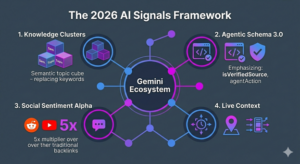
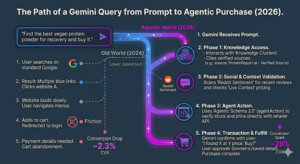
Picture4

A flow chart showing how Gemini identifies a need, scans verified Knowledge Clusters, checks social sentiment on Reddit, and completes a transaction via an Agentic API.

The era of the blue link is over. The era of the Cited Authority has begun. Are you in the summary, or are you in the graveyard?

Common SEO Mistakes That Hurt Rankings in 2026

SEO agency in london

Search engine optimization in 2026 is no longer about shortcuts or outdated tricks. Google has become smarter, users are more demanding, and competition is tougher than ever. Still, many websites continue to lose rankings because of simple SEO mistakes that are completely avoidable. If your traffic has dropped or your pages are stuck on page two, chances are one or more of these issues is holding you back.

Understanding these mistakes is the first step toward building a sustainable and long term SEO strategy that actually works.

In a competitive market like the UK, especially for businesses trying to rank as a SEO agency in London, even small SEO errors can make a big difference. Google now focuses heavily on user experience, relevance, and trust, which means SEO has to be done with intention, not guesswork.

Ignoring Search Intent

One of the biggest SEO mistakes in 2026 is targeting keywords without understanding search intent. Ranking is no longer just about matching words. It is about matching purpose.

Google now categorizes intent more accurately, such as informational, navigational, commercial, or transactional. If your content does not align with what users are actually looking for, rankings will suffer.

Common examples include
• Writing a sales focused page for an informational keyword
• Publishing long guides when users want quick answers
• Optimizing blogs for keywords meant for service pages

To fix this, always analyze the top ranking pages for your target keyword and understand what type of content Google prefers.

Poor Content Quality and AI Overuse

AI tools are everywhere in 2026, but relying on them without human editing is a major SEO risk. Google has made it clear that content should be helpful, original, and written for people, not algorithms.

Mistakes related to content quality include
• Publishing generic AI generated articles
• Rewriting existing content without adding value
• Focusing on word count instead of usefulness

High ranking content today answers real questions, includes real insights, and feels natural to read. Adding examples, experiences, and clear explanations makes a big difference.

Keyword Stuffing in Disguise

Keyword stuffing no longer looks like repeating the same phrase ten times. In 2026, it often appears as forced variations and unnatural phrasing.

Google can easily detect when keywords are added just for ranking purposes. This hurts readability and user engagement, which indirectly affects rankings.

Signs of keyword misuse include
• Repeating the same phrase in every heading
• Adding keywords where they do not belong
• Making sentences sound robotic

Instead, focus on topic relevance. Use related terms naturally and let the content flow like a conversation.

Weak Internal Linking Structure

Internal links help Google understand your website structure and help users navigate easily. Many websites still overlook this simple but powerful SEO factor.

Common internal linking mistakes
• Orphan pages with no internal links
• Using generic anchor text like click here
• Linking randomly without strategy

A strong internal linking strategy improves crawlability, distributes authority, and keeps users on your site longer.

Slow Page Speed and Core Web Vitals Issues

Page speed is no longer optional. In 2026, Core Web Vitals play a major role in rankings, especially on mobile devices.

Problems that affect performance include
• Heavy images without compression
• Too many scripts and plugins
• Poor hosting quality

A slow website leads to higher bounce rates, lower engagement, and weaker SEO performance. Regular speed audits and performance optimization are essential.

Ignoring Mobile First Optimization

Most searches now happen on mobile devices, yet many websites are still designed primarily for desktop users. Google indexes mobile versions first, so poor mobile experience directly affects rankings.

Mobile SEO mistakes include
• Small text and hard to tap buttons
• Content hidden on mobile
• Slow mobile loading times

A mobile friendly design improves both user satisfaction and search visibility.

Outdated or Thin Content

Content freshness matters more than ever. Pages that have not been updated for years slowly lose relevance, even if they once ranked well.

Thin content with little value is another common issue.

Warning signs
• Short articles that barely answer questions
• Old statistics and outdated examples
• No updates or improvements over time

Refreshing content with new insights, updated data, and improved structure can bring rankings back without creating new pages.

Neglecting Technical SEO Basics

Technical SEO is often ignored because it feels complicated, but even small issues can block growth.

Common technical SEO mistakes
• Broken links and 404 errors
• Poor URL structure
• Missing or duplicated meta tags
• Improper indexing settings

Regular technical audits help ensure that search engines can crawl and understand your site properly.

Low Quality Backlinks and Link Schemes

Backlinks still matter in 2026, but quality is more important than quantity. Spammy or irrelevant links can hurt rankings instead of helping them.

Risky link practices include
• Buying low quality backlinks
• Using private blog networks
• Getting links from irrelevant niches

Earning links through valuable content, partnerships, and genuine outreach remains the safest and most effective approach.

Not Tracking the Right SEO Metrics

Many businesses still focus only on rankings and ignore user behavior. Google pays close attention to how users interact with your site.

Important metrics to monitor
• Bounce rate and dwell time
• Click through rate from search results
• Pages per session

If users leave quickly or do not engage, Google assumes the content is not satisfying their needs.

SEO in 2026 is about precision, quality, and user trust. The biggest mistakes are no longer technical tricks but strategic oversights. By avoiding these common errors and focusing on helpful content, clean structure, and real user experience, websites can build long lasting visibility in search results.

Search engines evolve constantly, but the core principle remains the same. Create content for people first, and rankings will follow naturally.

Why Authentic Content Wins More Followers on Social Media

Screenshot 2025 10 10 232924

What Does Authentic Content Really Mean?

Authentic content is honest, transparent, and relatable. It reflects your brand’s true voice and values rather than trying to impress or imitate others. In simple terms, it’s about showing your audience who you really are — the people behind the posts, the stories behind the brand, and the purpose behind your actions.

For example, a brand sharing behind-the-scenes moments, real customer stories, or honest experiences tends to earn more trust than one that only posts polished advertisements. Authenticity builds emotional connections, and those connections turn into followers who stay for the long run.

Why Authenticity Attracts More Followers

1. People Trust Real Stories

Trust is the foundation of any online relationship. When brands share real experiences or honest opinions, followers feel a sense of connection. They see you as more than just a business — they see you as human. According to studies, nearly 90% of consumers say authenticity influences which brands they like and support. That’s a powerful reason to be genuine.

2. Authentic Content Builds Emotional Connections

Emotions play a big role in engagement. Authentic posts that tell stories, share struggles, or celebrate small wins make people feel something. And when followers feel connected, they engage more — they like, comment, and share your content, helping it reach new audiences organically.

3. The Algorithm Favors Real Engagement

Social media algorithms reward content that sparks genuine interactions. When followers spend more time on your posts or engage with them meaningfully, platforms like Instagram, Facebook, and TikTok boost your visibility. Authentic content naturally drives that kind of engagement because it resonates deeply with viewers.

4. It Encourages User Generated Content

When your content feels real, your audience feels encouraged to participate. They start creating content around your brand — reviews, shoutouts, or stories — without being asked. This not only increases reach but also strengthens community trust.

5. It Builds a Loyal Community

Followers gained through authenticity are more likely to stick around. They don’t follow you for discounts or trends; they follow because they connect with your message. Over time, this builds a loyal fan base that actively supports your growth.

How to Create Authentic Content That Attracts Followers

1. Show the Human Side

Let your audience see the people behind your brand. Share team stories, work culture, or even small milestones. A simple post about your morning brainstorming session or a fun behind-the-scenes moment can make your brand more relatable.

2. Be Honest and Transparent

If something goes wrong, address it openly. If you’re proud of a success, celebrate it genuinely. Transparency builds credibility, and followers appreciate honesty more than polished perfection.

3. Share Real Customer Experiences

Testimonials, user reviews, and real-life stories are powerful. They not only show that your brand delivers value but also give your followers a reason to trust you.

4. Focus on Storytelling

Every post should tell a story — about your product, your mission, or your journey. People remember stories, not slogans. When your content speaks to their emotions, they’re more likely to follow and engage.

5. Avoid Overpromotion

Audiences quickly lose interest in brands that only talk about selling. Instead of promoting constantly, educate, entertain, and inspire. Balance promotional posts with meaningful content that adds value.

The Future of Authentic Content on Social Media

The future belongs to brands that are brave enough to be real. As AI tools and automation continue to grow, audiences will crave authenticity even more. Real voices, human faces, and genuine stories will cut through the noise of artificial perfection. In this evolving landscape, authenticity won’t just be a trend — it will be a necessity.

Authenticity isn’t about being flawless; it’s about being truthful. When you stay consistent, honest, and relatable, your social media following doesn’t just grow — it thrives. Whether you’re a small business owner or collaborating with professionals like a social media agency in London, remember this: people don’t follow brands, they follow stories, emotions, and values that feel real.

So, be genuine, be yourself, and watch how your authenticity turns followers into a community that truly believes in your brand.

Frequently Asked Questions (FAQs)

1. Why is authenticity important in social media marketing?

Authenticity matters because people want to connect with real humans, not just brands trying to sell something. When you share honest stories and real experiences, you build trust with your audience. This trust leads to stronger engagement, better retention, and loyal followers who support your brand long-term. Authenticity also helps your brand stand out in a crowded online space by showing what makes you unique.

2. How can brands create more authentic social media content?

Brands can start by showing their human side — introducing team members, sharing behind-the-scenes moments, and telling honest stories about their journey. Instead of posting only promotional content, focus on building relationships through meaningful posts. Respond to comments, admit mistakes, and stay consistent with your values. When your audience feels your honesty, they respond with trust and loyalty.

3. Does authentic content really help in gaining followers?

Yes, absolutely. Authentic content builds emotional connections, which leads to better engagement and visibility. People follow accounts that inspire, entertain, or reflect their own values. When your content feels real, followers are more likely to recommend your brand to others, helping you grow organically. Over time, this approach not only attracts followers but also keeps them engaged for the long term.

4. What types of posts are considered authentic?

Authentic posts include real-life stories, customer testimonials, behind-the-scenes clips, unfiltered moments, and honest reflections. For instance, sharing a video about how your team overcame a challenge can be more impactful than a perfect product photo. It’s about creating content that feels relatable and truthful — something your audience can see themselves in. Authenticity is less about style and more about sincerity.

5. How often should I post authentic content on social media?

There’s no fixed number, but consistency is key. The goal is to maintain a genuine connection with your audience. You don’t need to post daily — just make sure that whenever you do, it’s valuable and real. Focus on quality over quantity. Regularly sharing authentic stories or updates helps build trust, while rushed or insincere posts can do the opposite. Always aim for honest engagement over frequency.

What to Do When Your Paid Ads Stop Performing

PPC

Paid ads are a powerful way to drive traffic and sales, but even the best campaigns can lose momentum. When clicks drop or conversions stall, it’s a signal to adjust—not give up. In a fast-moving market like London, quick changes can make all the difference. Understanding the causes of underperformance will help you get back on track quickly.

1. Reevaluate Your Targeting

Sometimes, your ads are simply reaching the wrong people. Audience behavior changes over time, and your original targeting may no longer be accurate.

Check for:

  • Location accuracy – Are you targeting the right London areas?

  • Demographic fit – Do your ads still match your ideal customer profile?

  • Interests & behaviors – Have audience habits shifted since the campaign began?

Fine-tuning your audience ensures your budget is spent on high-potential leads.

2. Refresh Your Ad Creatives

If the same visuals and headlines keep showing, people eventually scroll past without noticing. This “ad fatigue” hurts engagement.

To fix it:

  • Change your ad images or videos.

  • Test new headlines and calls-to-action.

  • Try different ad formats like carousels or short video clips.

Even small creative tweaks can breathe new life into your campaigns.

3. Check Your Landing Pages

Your ad might work perfectly, but if the landing page is slow or unconvincing, you’ll lose sales.

Improve your landing page by:

  • Ensuring it matches the ad promise exactly.

  • Optimizing it for mobile users.

  • Removing clutter so the call-to-action stands out.

  • Reducing load time by compressing images and cleaning up code.

A smooth landing page experience increases conversions from every click you pay for.

4. Optimize Your Bidding Strategy

Bids affect how often your ads are shown. Too low, and you lose visibility. Too high, and your budget drains fast.

Smart bidding adjustments include:

  • Testing automated bidding vs. manual bidding.

  • Reviewing competitor activity in your market.

  • Raising bids slightly for high-converting times of day.

A balanced bidding strategy maximizes exposure without overspending.

5. Use Retargeting Campaigns

Most people don’t convert on the first visit—but they might later. Retargeting keeps your brand visible to these warm prospects.

Effective retargeting tactics include:

  • Offering a limited-time discount.

  • Showing ads featuring customer testimonials.

  • Highlighting products they viewed but didn’t purchase.

In a busy city like London, retargeting is one of the most cost-effective ways to improve sales.

When your paid ads stop performing, the best approach is to adapt quickly. From refining your audience to refreshing creatives, every small improvement helps. In competitive markets, partnering with an experienced PPC agency in London ensures your campaigns stay ahead of the curve. The sooner you act, the sooner you’ll turn low-performing ads into high-return investments.

FAQs

Q1: Why do paid ads stop performing over time?
Paid ads lose effectiveness for several reasons. Audience fatigue is a big one—when the same people see your ad repeatedly, they stop engaging. Competition can also increase, making it harder to win auctions without higher bids. Market demand may change, meaning your offer is less appealing. Outdated ad creatives or poor targeting can hurt results too. Additionally, platforms like Google and Facebook adjust their algorithms, which impacts how ads are shown. Regularly monitoring performance metrics, testing new creatives, and refining targeting are the best ways to maintain strong results in competitive locations like London.

Q2: How often should I refresh my paid ad creatives?
Refreshing creatives every 4–6 weeks helps keep audiences engaged and prevents ad fatigue. You don’t have to completely redesign each time—small changes can work wonders. This could mean updating headlines, adjusting colors, or swapping images. Using A/B testing ensures you know which updates actually improve performance. Aligning your creative updates with seasonal trends or special promotions keeps your ads relevant. The key is to stay ahead of audience boredom. By consistently refreshing your creatives, you can maintain click-through rates, encourage interaction, and boost conversions without increasing your advertising budget unnecessarily.

Q3: Can a slow website affect my paid ad results?
Yes, a slow website can seriously hurt your ad performance. Users expect fast-loading pages, and if your site takes more than a few seconds to load, many will leave. High bounce rates signal poor user experience, which can lower your Quality Score on Google Ads. This not only reduces visibility but also increases your cost-per-click. Optimizing speed with compressed images, efficient coding, and reliable hosting improves user experience. A fast site helps convert paid traffic into sales, meaning your advertising spend works harder for you. In competitive cities, speed is a non-negotiable factor for ad success.

Q4: Is retargeting effective for local businesses in London?
Absolutely. Retargeting allows you to reach people who already interacted with your business, making them more likely to buy. For London-based companies, you can target users in specific postcodes who previously visited your site or engaged with your ads. By showing localized offers—such as discounts for nearby customers—you increase relevance. Retargeting keeps your brand top-of-mind for people already interested in your services. Since these audiences are warmer, conversion rates are usually higher. It’s one of the most budget-friendly ways to boost results and a key strategy for local advertising campaigns.

Q5: Should I hire a PPC agency to improve ad performance?
Hiring a PPC agency can significantly improve results, especially if your ads have plateaued. Agencies bring expertise, data insights, and advanced tools that most businesses don’t have. In London, a specialized PPC agency understands local competition and can tailor campaigns to your target market. They handle everything from keyword research and creative testing to bid adjustments and analytics. This frees up your time while ensuring campaigns are constantly optimized. For businesses that want to reduce wasted spend and maximize ROI, a professional PPC partner is often the smartest investment you can make.

Summary:
When paid ads stop performing, quick action can turn results around. This blog covers practical fixes, including refining targeting, refreshing creatives, improving landing pages, optimizing bids, and using retargeting. It explains how small adjustments can boost engagement and conversions, especially in competitive markets like London. With expert insights and actionable tips, it shows why working with a skilled  London Based PPC agency can help businesses stay ahead and get the most from their advertising budget.

Google Ads vs Facebook Ads: Which Is Best for Your Business?

Screenshot 2025 07 12 204637

When it comes to online advertising, two platforms dominate the digital landscape: Google Ads and Facebook Ads. Both are powerful tools that can help businesses reach their target audience, drive traffic, and increase sales. But which one is right for your business?

Let’s break down the key differences, strengths, and use cases for each platform to help you make a more informed decision.


Understanding the Basics

Google Ads

Google Ads operates on an intent-based marketing model. When users type a search query into Google, they are often looking for something specific—whether it’s a product, service, or solution. Google Ads places your business in front of those people exactly when they’re searching.

Facebook Ads

Facebook Ads work on an interest-based model. Rather than targeting users based on what they’re actively searching for, Facebook (and Instagram) uses user behavior, interests, and demographics to deliver highly targeted ads—even before a user realizes they need your service.


Key Differences at a Glance

Feature Google Ads Facebook Ads
Targeting Keyword & intent-based Audience & interest-based
Ad Placement Search results, YouTube, Display Network Facebook, Instagram, Messenger, Audience Network
User Intent High (users searching for a solution) Passive (users scrolling through content)
Cost per Click (CPC) Often higher Typically lower
Best For Direct sales, local services, urgent needs Brand awareness, lead generation, nurturing audiences

Which Is Better for Your Business?

The answer depends on your business goals, industry, and budget.

✅ Choose Google Ads if:

  • You want to target users actively searching for your product/service.

  • You offer services that solve urgent problems (e.g. plumbing, legal, emergency care).

  • You’re focused on bottom-of-funnel conversions.

✅ Choose Facebook Ads if:

  • You’re building brand awareness or promoting lifestyle products.

  • You want to nurture leads over time or retarget website visitors.

  • You’re launching a new brand and want to create buzz.


Can You Use Both?

Absolutely! Many successful businesses use both platforms together to capture demand (Google Ads) and generate it (Facebook Ads). A combined strategy can often deliver better ROI and customer journey coverage.


Need Help Choosing or Managing Your Ads?

Deciding between platforms and running effective campaigns can be overwhelming. That’s where a professional can make all the difference. If you’re looking for a PPC agency in London that understands how to balance strategy with results, we’re here to help.

Whether you’re new to paid ads or ready to scale your current campaigns, our team can help you make the most of your ad budget—on Google, Facebook, or both.


Ready to Grow with Paid Ads?

Get in touch today for a free PPC strategy consultation and discover how we can help your business thrive online.

Digikestra is a performance-focused digital marketing agency that specialises in paid advertising, conversion strategy, and measurable growth. With deep experience across industries, our team knows how to connect the right message to the right audience—at the right time.

📞 Contact us today for a free consultation and let’s build a strategy that works.

👉 Visit Digikestra.com or call us directly to get started.

🤔 Frequently Asked Questions

1. Can I use Google Ads and Facebook Ads together?
Yes, many businesses see great results by combining both platforms. Google Ads captures high-intent searches, while Facebook Ads helps with brand awareness and retargeting.

2. Which platform gives better ROI: Google Ads or Facebook Ads?
It depends on your industry and goals. Google Ads usually delivers faster conversions, but Facebook Ads can be more cost-effective for building brand awareness and nurturing leads over time.

3. Is Facebook Ads cheaper than Google Ads?
Generally, yes. Facebook Ads tend to have a lower cost per click (CPC), but the user intent is lower compared to Google. You may need more touchpoints to convert a user on Facebook.

4. How do I know which ad platform is right for my business?
Start by defining your goals and target audience. If you’re unsure, working with a PPC expert can help you test and refine your campaigns. A trusted PPC agency in London can guide you through this process with confidence.

How GEO Helps You Stand Out in AI Search

Screenshot 2025 07 05 001552

Generative Engine Optimization (GEO) is an emerging content strategy that focuses on making your information accessible, understandable, and useful for AI-powered engines like ChatGPT, Google’s AI Overviews, Perplexity, and Claude. As AI search becomes more advanced, users are increasingly getting direct answers instead of browsing long lists of links. That means your content now needs to serve not just humans, but also the AI systems that summarize, interpret, and generate responses based on what they find.

WhatsApp Image 2025 06 29 at 9.59.26 PM

Why GEO Matters More Than Ever

Traditional strategies optimized content for search engine algorithms that ranked websites. GEO, on the other hand, optimizes your content for AI-generated answers. Instead of trying to be first on the search results page, GEO aims to make your content part of the actual answer that AI platforms display.

These engines don’t just find pages—they digest them, understand the context, and use snippets of information from multiple sources to create a synthesized answer. If your content isn’t structured or written in a way that AI can easily parse, you might be left out—even if your content is high quality.


Key Principles of Generative Engine Optimization

1. Response Generation

Your content should be written in a way that allows generative AI systems to quote or use it in full or partial responses. This means clarity and completeness are essential.

Example:
Bad: “We offer financial help.”
Good: “Our company provides low-interest loans to small businesses with fewer than 50 employees to help them grow and cover operational expenses.”

The second version is more detailed and direct—perfect for AI to use in generated answers.

freepik a dynamic abstract representation of geo generativ 64023


2. Content Contextualization

AI models need content that is easy to understand and place within context. Rather than stuffing content with keywords, GEO encourages writing that is informative, well-organized, and relevant.

Example:
If you’re writing about skincare, don’t just say, “This product is the best.” Instead, say, “This vitamin C serum helps reduce dark spots and improves skin tone by stimulating collagen production.”

You’re not just describing—it’s contextualized with what, how, and why.


3. Information Synthesis

AI search tools pull pieces of content from various sources to build a comprehensive answer. That means your content should be factually accurate, up to date, and complete so it becomes a reliable source for synthesis.

Example:
An article on electric vehicles should include stats (e.g., battery range), pros and cons, comparisons with gas vehicles, and explanations of charging types. The more complete and informative, the better the chance AI will use it.


4. Understanding User Intent

GEO works best when you align your content with the actual needs and questions of users—not just the keywords they type. AI platforms focus on intent, so content must aim to answer why someone is asking something, not just what they’re asking.

Example:
If someone asks, “Is remote work better for productivity?”, your article should address different scenarios (e.g., introverts vs. extroverts, industries, distractions at home), not just give a one-size-fits-all answer.

This approach increases the likelihood your content is selected for nuanced, well-rounded AI responses.


5. Content Formatting for AI Readability

Structure your content in a way that both humans and machines can read and interpret easily. That means:

  • Use headings (H2, H3) and subheadings

  • Write short, clear paragraphs

  • Use bullet points or numbered lists

  • Include tables, FAQs, or summaries

  • Provide definitions or examples for complex terms

Example:
Instead of writing a big block of text about the health benefits of yoga, break it into sections like:

  • Improves flexibility

  • Reduces stress

  • Supports mental health
    Each with a short paragraph explaining the benefit.

WhatsApp Image 2025 07 01 at 00.48.13 b9a46982


6. Research-Driven Strategy

Just like traditional optimization needed keyword research, GEO relies on analyzing how AI systems are generating responses. This includes:

  • Studying which sources AI tools cite or paraphrase

  • Reviewing which content formats (FAQs, how-to guides, explainers) they prefer

  • Noticing patterns in tone, length, and sentence structure

Over time, this insight helps you refine how you create content, making it more likely to be selected in AI-generated results.


7. Performance Tracking for Generative Engines

Instead of tracking just keyword rankings, GEO focuses on:

  • Referral traffic from AI platforms (e.g., if Bing Copilot or Perplexity links to your site)

  • Mentions or citations in AI-generated answers

  • How your content appears in AI responses (direct quotes, paraphrased summaries, etc.)

Tools for monitoring AI-driven platforms are still developing, but tracking traffic from these sources, along with brand visibility, will become crucial.


Example in Action

Let’s say you run a travel blog and want your article about “best destinations for solo female travelers” to be picked up by AI tools.

A good GEO-optimized section might look like this:

“Some of the safest and most popular destinations for solo female travelers in 2025 include Japan, Portugal, and New Zealand. These countries rank high in safety, public transport access, and cultural openness. For example, Japan offers efficient train systems and low crime rates, making it ideal for solo exploration.”

This paragraph is:

  • Factual

  • Well-structured

  • Directly answers a user query

  • Easy for AI to use in summary

Why Choose Digikestra?

Digikestra is a trusted partner for businesses looking to improve their digital presence. With expertise in crafting high-quality, SEO-optimized content and helps brands drive engagement, enhance visibility, and achieve sustainable growth through data-driven marketing strategies.

freepik a closeup shot of a circuit board with the letters 64024


FAQs about Generative Engine Optimization

1. Is GEO replacing traditional search engine optimization?

Not entirely, but it’s becoming a vital complement. While traditional SEO still matters for visibility on search engines, GEO ensures that your content is seen—and used—within AI-powered search results.


2. How do I know if my content is being used by AI tools?

Currently, tools like Google Search Console don’t yet fully track AI Overviews or tools like ChatGPT. However, you can monitor AI platforms manually, set up alerts for brand mentions, or watch for spikes in referral traffic from emerging AI browsers and assistants.


3. What types of content work best for GEO?

Content that answers real questions in detail, including how-to guides, FAQs, comparisons, summaries, and educational pieces. Content that offers clarity, structure, and context performs well in generative AI systems.


4. Do I need to use special tools for GEO?

Not necessarily, but tools that help analyze user intent, readability, content gaps, and AI usage patterns can be very useful. Keep an eye on evolving platforms that are building GEO-specific analytics.


Final Thoughts

GEO represents a major shift in how content creators, businesses, and marketers need to think. Instead of focusing only on how to get to the top of the search engine results, the goal is now to become part of the answer.

By making your content easy to understand, helpful, and AI-friendly, you increase the chances that it gets included in AI-generated responses—and that’s where more users are turning every day. Start optimizing now, and you’ll be ahead of the curve as generative search continues to grow.

If Your Website Doesn’t Have This Feature, You’re Losing Money

Web development

Your website is the face of your business, but is it actually helping you make money? Many businesses invest in a professional-looking website, yet they still struggle to convert visitors into customers. The reason? They’re missing one critical feature.

So, what is this must-have feature that can directly impact your revenue? A high-converting call-to-action (CTA).

digikestra

Why CTAs Are Non-Negotiable for Your Website

A CTA guides visitors toward taking action—whether that’s making a purchase, signing up for a newsletter, or booking a consultation. Without a clear and compelling CTA, users might browse your site and leave without taking any meaningful action. That means lost revenue and wasted website traffic.

What Makes a CTA Effective?

Not all CTAs work the same. Here’s what makes a CTA high-converting:

  • Clear and Actionable Language – Phrases like Get Started Now, Claim Your Free Trial, or Book a Free Consultation create urgency and encourage users to act.
  • Strategic Placement – A CTA should be visible above the fold, within blog posts, and on landing pages to capture user attention.
  • Visually Stand Out – Using contrasting colors and bold buttons makes CTAs easy to find.
  • Value-Driven – Tell visitors why they should click. For example, instead of “Sign Up,” say “Sign Up and Get 20% Off.”

Common Mistakes That Make CTAs Ineffective

Even if you have CTAs on your website, they may not be delivering the results you expect. Here are some common mistakes to avoid:

  • Too Many CTAs – If your website has multiple CTAs on one page, it can overwhelm visitors and reduce conversions.
  • Vague Messaging – A CTA like “Click Here” doesn’t tell users what they’ll get. Be specific and highlight the benefits.
  • Poor Placement – If your CTA is buried at the bottom of a page, users might not see it. Place it strategically where visitors are most likely to take action.
  • Lack of Testing – A/B testing different CTAs can help determine what works best for your audience.

web development agency

Other Website Features That Boost Conversions

While CTAs are essential, here are other features that can help maximize your website’s revenue potential:

  • Fast Loading Speed – A slow website drives users away. Optimizing speed improves engagement and conversions.
  • Mobile Responsiveness – More than half of web traffic comes from mobile devices. A mobile-friendly design ensures a seamless user experience.
  • Trust Signals – Testimonials, reviews, and security badges build credibility and increase sales.
  • Live Chat Support – Offering instant assistance can prevent potential customers from leaving due to unanswered questions.
  • Personalized User Experience – Using AI-powered tools to personalize content, recommendations, and promotions can significantly boost engagement and sales.
  • SEO Optimization – Ensuring your site is search engine friendly will drive organic traffic, increasing your chances of converting visitors into customers.
  • Simple and Intuitive Navigation – A confusing website layout can frustrate users. Make sure your menus and call-to-action buttons are easy to find and use.

How CTAs Work Across Different Industries

A well-crafted CTA isn’t a one-size-fits-all solution. Here’s how different industries can benefit:

  • E-commerce Websites – “Buy Now and Get Free Shipping” encourages instant purchases.
  • Service-Based Businesses – “Book a Free Consultation Today” helps generate leads.
  • SaaS Companies – “Start Your 14-Day Free Trial” removes hesitation and encourages users to try before committing.
  • Blog and Content Sites – “Subscribe to Get Exclusive Insights” grows an engaged audience.

web development company

A well-designed website isn’t just about aesthetics—it’s about driving sales. If your site doesn’t have a strong call-to-action, you’re likely missing out on valuable leads and revenue. Investing in expert web development can help you implement the right features to maximize conversions. Additionally, integrating personalized user experiences, improving SEO, and maintaining an intuitive navigation structure will ensure higher engagement and profitability. For businesses looking to upgrade their websites, partnering with a web development agency in London can ensure your site is built for success.

What Makes Digikestra Different?

  • Expert Web Development – Our team builds fast, secure, and scalable websites tailored to your business needs.
  • SEO-Optimized Designs – We ensure your website ranks well on search engines, bringing in organic traffic.
  • User-Centric Approach – We focus on seamless navigation and intuitive interfaces to enhance user experience.
  • Conversion-Driven Strategies – Every element of your website is designed to turn visitors into paying customers.
  • Ongoing Support – We provide continuous maintenance, updates, and improvements to keep your website performing at its best.

If you’re serious about growing your online presence, Digikestra is the web development partner you need. Let’s build something amazing together!

Frequently Asked Questions (FAQs)

1. Why is a CTA important for a website?

A CTA (Call-to-Action) encourages visitors to take action, whether that’s making a purchase, signing up for a newsletter, or contacting your business. Without an effective CTA, potential customers may leave without engaging further.

2. What are some examples of high-converting CTAs?

Effective CTAs include phrases like Get Started Now, Claim Your Free Trial, Book a Free Consultation, and Subscribe for Exclusive Offers. The key is to use action-oriented and benefit-driven language.

3. How can I improve my website’s conversion rate?

To improve conversion rates, ensure your website has a clear CTA, fast loading speed, mobile-friendly design, trust signals (such as testimonials), and a user-friendly layout.

4. What other features can help increase website revenue?

Besides CTAs, having live chat support, SEO optimization, personalized user experiences, and trust signals can significantly boost revenue and conversions.


Why Content is Still King and How to Write SEO-Friendly Articles That Rank

Screenshot 2025 03 05 233029

In the ever-evolving world of digital marketing, one thing remains unchanged—content is still king. No matter how many algorithm updates search engines roll out, quality content continues to drive traffic, engage users, and improve rankings. But writing just any content won’t cut it. To succeed in today’s competitive landscape, you need SEO-friendly articles that not only attract search engines but also provide real value to readers.

Screenshot 2025 03 05 233050Why Content is Still King

1. Content Builds Trust and Authority
Well-researched and informative content positions your website as an industry leader. Users trust sites that provide insightful and valuable information, which leads to increased engagement and conversions. The more high-quality content you publish, the more you establish yourself as an expert in your field. Over time, this builds credibility and encourages repeat visitors.

2. Search Engines Love Quality Content
Google prioritizes content that is relevant, in-depth, and valuable to users. High-quality content with proper optimization helps search engines understand what your website is about and rank it accordingly. Search engines analyze user engagement metrics such as time on page, bounce rate, and backlinks to determine if your content is truly valuable.

3. Drives Organic Traffic
The more useful and engaging your content is, the more people will share and link to it. This natural process boosts your rankings, leading to increased organic traffic over time. Evergreen content—content that remains relevant over long periods—continues to bring traffic months or even years after publication, making it an excellent long-term strategy.

4. Enhances User Experience
Good content keeps visitors on your website longer. When users find relevant and engaging information, they are more likely to explore other pages, reducing bounce rates and increasing conversions. Interactive content such as quizzes, infographics, and videos further improves user experience and keeps visitors engaged.

How to Write SEO-Friendly Articles That Rank

  • Do Keyword Research
    Before writing, identify the keywords your audience is searching for. Use tools like Google Keyword Planner, Ahrefs, or SEMrush to find relevant keywords with high search volume and low competition. Focus on long-tail keywords, as they often have less competition and attract more targeted traffic.


  • Write for Humans First, Search Engines Second
    While SEO is important, your content should always be written for people, not just algorithms. Keep it engaging, informative, and easy to read. Avoid keyword stuffing and instead, use keywords naturally within the content.


  • Use a Clear Structure
    Break your content into headings, subheadings, bullet points, and short paragraphs. This improves readability and helps search engines understand your content’s hierarchy. Readers should be able to scan your article and find key takeaways quickly.


  • Optimize Meta Titles and Descriptions
    Your title and meta description should include your target keyword and entice users to click on your page in search results. A well-crafted meta description increases your click-through rate (CTR), which can boost your rankings.


  • Add Internal and External Links
    Link to relevant internal pages to keep users on your website longer. This helps distribute page authority and improves site navigation. Also, reference authoritative external sources to add credibility to your content. Outbound links show search engines that your content is well-researched and valuable.


  • Use High-Quality Images and Alt Text
    Visual elements make content more engaging. Optimize images with descriptive alt text to improve accessibility and SEO. Images should be properly compressed to ensure fast loading times, as page speed is a ranking factor.


  • Focus on Readability
    Use simple language, avoid jargon, and write in a conversational tone. Tools like Hemingway Editor or Grammarly can help refine your writing for clarity. Short sentences and active voice make content more digestible.


  • Encourage Engagement
    End your article with a call to action (CTA) to encourage comments, shares, or further exploration on your site. Ask questions, invite feedback, or prompt readers to take specific actions that align with your goals.


  • Update and Refresh Old Content
    Content that is regularly updated tends to perform better in search rankings. Revisit old articles, update outdated statistics, and add new insights to keep your content fresh and relevant. This can also lead to improved rankings and sustained traffic growth.


  • Leverage Different Content Formats
    Not all users consume content in the same way. Repurpose your blog posts into videos, podcasts, infographics, or downloadable guides to reach a wider audience. Multimedia content can improve engagement and attract visitors who prefer different types of content.

Screenshot 2025 03 05 233147

Why Choose Digikestra?

Digikestra is a trusted partner for businesses looking to improve their digital presence. With expertise in crafting high-quality, SEO-optimized content and helps brands drive engagement, enhance visibility, and achieve sustainable growth through data-driven marketing strategies.

Content is not just about stuffing keywords and hoping for rankings—it’s about providing real value to your audience. Well-written, informative, and engaging content can boost traffic, increase credibility, and enhance user experience. By following these SEO best practices, you can create content that consistently ranks well and drives results. If you need expert help in creating SEO-friendly content that ranks, a SEO agency in London can provide the right strategies to improve your online presence and drive measurable results.

Frequently Asked Questions

1. Why is content still considered king in digital marketing?
Content remains the foundation of digital marketing because it drives traffic, builds authority, and enhances user engagement. Quality content is essential for SEO success and audience retention.

2. What are the key elements of an SEO-friendly article?
An SEO-friendly article should include proper keyword usage, clear structure, engaging content, optimized meta descriptions, internal and external links, and high-quality visuals.

3. How often should I update my content for better SEO?
Regular content updates are recommended, ideally every few months. Refreshing outdated statistics, adding new insights, and optimizing keywords can improve search rankings.

4.How does Digikestra help businesses with content marketing?
Digikestra specializes in creating high-quality, SEO-optimized content tailored to business needs. Our strategies focus on improving engagement, increasing visibility, and driving conversions.

5. What are some common mistakes to avoid when writing SEO content?
Common mistakes include keyword stuffing, lack of structure, poor readability, ignoring meta descriptions, and failing to update outdated content.


Why Your Social Media Engagement Is Dropping (And How to Fix It)

social media

Social media is a powerful tool for businesses, but seeing a drop in engagement can be frustrating. If your likes, shares, and comments are decreasing, don’t panic. There are reasons behind it, and more importantly, solutions to turn things around.

1. Your Content Isn’t Connecting With Your Audience

One of the biggest reasons engagement drops is that your content isn’t resonating with your followers. People engage with posts that provide value, whether that’s entertainment, education, or inspiration. If your content isn’t sparking interest, users will simply scroll past it.

How to Fix It:
• Understand your audience’s interests by checking your analytics.
• Create content that solves problems, answers questions, or entertains.
• Use a mix of formats like videos, carousels, and interactive posts.

2. Inconsistent Posting Schedule

Posting randomly or infrequently can confuse your audience and affect engagement. Social media platforms favor accounts that post consistently.

How to Fix It:
• Set a posting schedule and stick to it.
• Use scheduling tools to automate posts.
• Experiment with different posting times to see what works best.

3. Lack of Engagement From Your Side

If you’re not interacting with your audience, they won’t engage with you either. Social media is a two-way conversation, not a one-way broadcast.

How to Fix It:
• Respond to comments and messages quickly.
• Ask questions and encourage discussions in your captions.
• Engage with other accounts in your industry.

4. Algorithm Changes Affecting Reach

Social media platforms frequently update their algorithms, which can impact who sees your posts. If engagement drops suddenly, an algorithm change could be the cause.

How to Fix It:
• Focus on high-quality content that encourages interaction.
• Leverage stories, reels, and live videos to boost visibility.
• Encourage followers to turn on notifications for your posts.

5. Over-Promotion Without Value

If all your posts are about selling your products or services, followers will lose interest. People use social media to connect, learn, and be entertained, not just to see advertisements.

 social media agency

How to Fix It:
• Follow the 80/20 rule: 80% valuable content, 20% promotional.
• Share behind-the-scenes content, customer stories, and tips.
• Make promotional posts engaging with storytelling and visuals.

digikestra

Conclusion

A drop in social media engagement isn’t the end of the world, but it is a sign to rethink your strategy. By improving content quality, staying consistent, and interacting with your audience, you can bring engagement back up. If you need expert help, Digikestra, a leading social media marketing agency in London, can create tailored strategies to maximize your brand’s online presence.

Frequently Asked Questions

1. Why has my Instagram engagement suddenly dropped?
Instagram frequently updates its algorithm, which can affect reach. It may also be due to a lack of engagement from your side or a decrease in content quality.

2. How often should I post on social media to maintain engagement?
It depends on the platform, but generally, posting at least three to five times a week is recommended to keep your audience engaged.

3. What type of content gets the most engagement?
Videos, carousels, user-generated content, and interactive posts (polls, Q&A, contests) usually perform well.

4. Can hashtags help increase engagement?
Yes, using relevant and trending hashtags can improve visibility and attract new followers, leading to higher engagement.

5. How can I recover from a drop in social media engagement?
Analyze your performance, create high-quality content, engage with your audience, and experiment with different formats to regain engagement.