

How does a Digital Marketing Agency help Small Businesses

12

Running a small business can feel like juggling multiple tasks at once. From managing inventory to serving customers, you’re constantly on the move. In today’s digital landscape, a strong online presence poses another huge challenge for small businesses. Navigating the ever-evolving world of digital marketing can be daunting. This is where a digital marketing agency comes in handy and reduces your struggle to a great extent by helping you in following ways:

1. Provide Access to the Latest Tools and Tech

A digital marketing agency equips your business with cutting-edge tools and technology. From social media management platforms to analytics dashboards, they ensure you stay ahead in the digital landscape.

For instance: Social Media Management

Imagine you run a cozy coffee shop. The agency sets up your social media profiles (Facebook, Instagram, Twitter) and uses tools like Hootsuite or Buffer to schedule posts. They’ll create engaging content about your daily specials, latte art, and customer stories.

71% of businesses use social media, but only 26% integrate it into their overall strategy and thus harness the true power of Social Media.

image

2. Craft Fresh, High-Impact Content

Content is king! A digital marketing agency creates compelling content that resonates with your audience. Whether it’s blog posts, videos, or infographics, they ensure your brand stands out.

For instance: Blog Content Creation

A digital marketing agency can jumpstart your blog and fuel business growth! They’ll work with you to understand your target audience and craft compelling blog posts that resonate. Forget generic content – they’ll create informative, engaging articles that position you as an industry expert. This attracts new visitors searching for answers, establishes trust, and drives leads. Plus, SEO magic! By optimizing your blog for relevant keywords, they’ll make it easier for potential customers to find you online. The result? A content powerhouse that fuels brand awareness, lead generation, and ultimately, business growth.

Did you know that companies with active blogs generate 67% more leads than those without? [Source: HubSpot]


3. Grow Your Online Presence

Visibility matters! A digital marketing agency ensures your business appears where potential customers are searching. They optimize your online presence through local SEO, Google My Business, and targeted content.

For instance: Local SEO Optimization

Imagine your ideal customer searching for “[your service] near me.” Local SEO ensures your business pops up at the top of Google Maps and local search results. The agency optimizes your Google My Business profile, builds citations (online listings with your business info), and crafts content packed with local keywords. They’ll also manage online reviews, building trust and attracting more customers straight to your door. By making you the local go-to, Local SEO is a powerful tool for business growth.

78% of mobile searches for local businesses lead to offline purchases!

image 1


4. Adapt to Changing Search Engine Algorithms

Search engines evolve. A digital marketing agency stays informed about algorithm updates and adjusts strategies to maintain high rankings and visibility.

For instance: Algorithm-Driven Content Strategy

Suppose Google prioritizes mobile-friendly websites. The agency tweaks your site design, creates mobile-responsive landing pages, and adjusts content accordingly. A digital marketing agency can crack the code with an algorithm-driven strategy. They analyze data to understand your audience and the platforms they use. Then, they craft targeted content that search engines and social media algorithms love, boosting your visibility and engagement. This translates to organic reach, attracting new customers and propelling your business growth.

A well-researched study by BuzzSumo in 2023 found that content optimized for algorithms receives 3x more shares and links compared to content that isn’t

image 2

5. Develop Long- and Short-Term Strategies

Agencies create comprehensive marketing plans, balancing immediate results with long-term growth. They align strategies with your business goals.

For instance: Email Marketing Campaigns

For your online bookstore, the agency designs email campaigns. They send personalized book recommendations, announce flash sales, and track open rates. They craft targeted campaigns that reach the right audience at the right time. With engaging content and strategic timing, they nurture leads, rekindle interest with past customers, and ultimately drive sales. By analyzing results, they can fine-tune your campaigns for maximum impact, helping you build relationships and grow your business.

Segmented email campaigns can generate a whopping 760% increase in revenue compared to blasting generic messages to your entire list!


6. Monitor and Evaluate Campaign Analytics

Data-driven decisions are crucial. Agencies analyze campaign performance, providing actionable insights to optimize your marketing efforts.

For instance: Google Analytics Insights

The agency dives into data. They analyze website traffic, conversion rates, and user behavior. Google Analytics is your website’s secret diary for a digital marketing agency. By deciphering it, they see what content resonates, where visitors come from, and if your marketing efforts translate to sales. This intel helps them craft targeted campaigns, optimize your website for conversions, and identify areas for growth – all fueled by real user data, not guesswork. So, Google Analytics becomes a roadmap to attracting, engaging, and converting more customers for your business.

Google Analytics reigns supreme in the web analytics world, with a whopping 28.1 million websites using it to track user data and website performance [source: The Social Shepherd].

image 3

7. Manage Your Budget More Effectively

Digital marketing agencies help allocate resources wisely, ensuring maximum return on investment (ROI) across various channels.

For instance: Paid Advertising Budget Allocation

As a small tech startup, every dollar counts. Your paid advertising budget is like a pie – how you slice it matters! Think about your goals first – brand awareness needs a different strategy than driving sales. Then, consider who you’re trying to reach. Younger demographics might be on social media, while traditional channels like print might be better for others. Finally, it’s not set in stone! Allocate more budget to channels that perform well and adjust as you go. Remember, tracking results is crucial for getting the most out of your advertising pie. A Digital Marketing agency keeps all of the above factors and many more in mind while devising best strategy while allocating budget to different PPC Ad channels.

In 2024, digital advertising continues to dominate, claiming over 70% of total ad spend.


A digital marketing agency can be your secret weapon, helping you reach new customers, build brand loyalty, and ultimately, achieve your business goals. So, share this knowledge with your fellow entrepreneurs! By empowering others, you create a thriving small business community, and that benefits everyone.


How to utilize AI to improve keyword research?

post1

Introduction:

Struggling with traditional keyword research? Spending hours pouring over spreadsheets? There’s a better way. AI-powered keyword research tools are revolutionizing the SEO game, offering a faster, more efficient, and insightful approach. This guide explores how AI can elevate your keyword research, helping you discover hidden opportunities, save valuable time, and outrank the competition.

Why AI?

Imagine a super-powered assistant analyzing vast amounts of data in seconds, uncovering insights that would take humans days. That’s the power of AI. These intelligent tools leverage machine learning algorithms to:

  • Understand Search Intent: AI goes beyond simple keyword matching, analyzing the context and meaning behind searches to identify the user’s true intent.
  • Predict Trends: Don’t get caught playing catch-up. AI can predict keyword trends based on historical data, allowing you to proactively optimize your content calendar.
  • Generate Smart Suggestions: Stuck for keyword ideas? AI tools can analyze seed keywords and generate comprehensive lists of related terms, long-tail keywords, and valuable phrases, expanding your targeting potential.

Benefits of AI Keyword Research:

  • Save Time: Ditch the manual labor. AI tools analyze data rapidly, freeing up your time for strategy and content creation.
  • Data-Driven Insights: AI analyzes user intent, search patterns, and competitor strategies, providing comprehensive insights to refine your keyword approach.
  • Uncover Hidden Opportunities: AI can identify valuable keywords you might have missed, opening doors to untapped markets and audience segments.

Challenges of AI Keyword Research:

  • Over-reliance on Automation: Don’t let AI do all the thinking. Utilize AI as a tool, not a replacement for your industry knowledge and intuition.
  • Data Quality Matters: AI is only as good as the data it’s trained on. Be wary of outdated or biased data that could lead to inaccurate suggestions.
  • Context is Key: AI might miss industry-specific jargon or language nuances. Interpret results through the lens of your business.

Top AI Keyword Research Tools:

  • AI-Enhanced Powerhouses:
    • Semrush: Renowned for its in-depth capabilities, Semrush leverages AI integrations to analyze keyword difficulty, search volume, and SERP performance. Its Keyword Magic Tool identifies keyword clusters and suggests long-tail options based on user intent.
    • Ahrefs: Another SEO giant, Ahrefs uses AI to power its data-driven insights. It excels in competitor analysis, revealing which keywords your rivals rank for and where your content gaps lie. AI also improves traffic estimations and keyword difficulty scores.
  • Pure AI Solutions:
    • Jasper AI: This content creation powerhouse offers keyword research capabilities. Prompt Jasper to generate keyword ideas, content outlines, and even articles based on seed keywords (human review remains crucial). Jasper is valuable for brainstorming and uncovering long-tail keywords.
    • Claude AI: This AI assistant assists with keyword research by brainstorming ideas, suggesting long-tail options, and grouping them into relevant categories. While it lacks real-time competitor data, it can offer content insights based on your chosen keywords.
    • ChatGPT: Though not a dedicated keyword research tool, ChatGPT shines at generating ideas and exploring search intent. It’s a fantastic brainstorming partner for fleshing out keyword lists and exploring new content angles.

Implementing AI into Your Strategy:

  1. Generate Ideas with AI: Fire up ChatGPT or Jasper AI to spark a brainstorm. You’ll receive a wider range of suggestions than you could generate alone.
  2. Crunch the Numbers: Feed those AI-generated ideas into Semrush or Ahrefs to get hard data on search volume, competition level, and trends.
  3. Decode User Intent: Leverage AI to analyze search intent, but filter it through your industry expertise. Ensure chosen keywords align with your business goals.
  4. Optimize Smartly: Let AI suggest keyword placements, but trust your gut feeling. Maintain a natural and valuable content flow – avoid keyword stuffing.
  5. Stay Agile: Monitor performance using AI-powered analytics, but remain adaptable. Leverage your business knowledge to interpret the data and make adjustments.

Conclusion:

The future of SEO is here, and AI is leading the charge. By incorporating AI keyword research tools into your strategy, you’ll unlock hidden opportunities, save valuable time, and propel your website to organic traffic success. Remember, the most powerful approach combines AI’s data analysis with your unique industry expertise and creativity. So, start experimenting with AI tools today, and watch your SEO soar!

How to increase SEO Dwell Time for your website?

How to increase Dwell Time for your website

If you’re working hard to rank for a specific keyword but still aren’t seeing top positions in search engine results, your dwell time might be an important factor at play. Dwell time refers to how long a user stays on your page after clicking a search result before returning to the search engine. If visitors are quickly leaving your site and finding their answers elsewhere, it’s crucial to address this.

This guide will explain the role of dwell time in SEO and provide actionable steps to improve it.


Key Insights

  • Dwell time is the period a user spends on your webpage after clicking a link from the SERP before returning to search results.
  • A longer dwell time indicates that your content is relevant and engaging, which can positively influence rankings.
  • To improve dwell time, focus on creating high-quality content that aligns with user intent and provides a seamless browsing experience.

What Is Dwell Time?

Dwell time refers to the amount of time a user spends on a webpage after clicking a link from the search results and before returning to the SERP. Longer dwell times generally signal that users find your content valuable and relevant, which can boost your search engine rankings.

It’s important to understand that dwell time helps measure whether the content answers the user’s query effectively. If users spend a lot of time on your site, it could indicate that they found what they were looking for, thus signaling relevance to search engines.


Why Dwell Time Matters

Dwell time is a key indicator of user engagement and content quality. For example, if someone searches for “healthy morning routine” and clicks on a result but quickly bounces back to the search results, it may signal that the page didn’t meet their expectations.

In contrast, if users spend several minutes on a page, it suggests they found the content helpful, which can signal to search engines that your page is relevant. Higher dwell time can lead to better rankings, more traffic, and greater conversions.


Dwell Time vs. Bounce Rate vs. Time on Page

Though similar, dwell time, bounce rate, and time on page measure different aspects of user engagement. Here’s how they differ:

  • Dwell time: Measures the time a user spends on your page after clicking a search result and before returning to the SERP.
  • Time on page: Tracks how long a user stays on a specific page without navigating elsewhere on the site.
  • Bounce rate: Refers to the percentage of visitors who land on a page and leave without interacting with it, like clicking links or filling out forms.

Dwell time is specifically about how long someone stays after clicking from search results, while time on page and bounce rate cover broader site-wide engagement.


Ways to Boost Dwell Time

Here are seven effective strategies you can apply today to increase the amount of time visitors spend on your site.


1. Capture Attention Right Away

To keep visitors engaged, you need to grab their attention within the first few seconds of landing on your page. The introduction should be interesting, relevant, and clear about what the user will gain by reading further.

A good tactic is to include a summary or key takeaways section at the beginning of your content. This provides immediate value, encourages further reading, and ensures users know what to expect.


2. Make Your Content Easy to Read and Skim

While a strong introduction is crucial, content readability is just as important. Visitors tend to scan online content, so structure your page to make it easy to skim.

Use headings, subheadings, and bullet points to break your content into bite-sized chunks. Including visuals like images, infographics, or diagrams can also help maintain interest and make your page more engaging.


3. Add Engaging Visuals and Media

Rich media, such as images, videos, and infographics, can help boost dwell time by making content more interactive and easier to digest. Visual content can break up long sections of text and explain complex concepts in a more accessible way.

Incorporating videos, such as tutorials or product demos, can keep visitors engaged longer. Videos are especially effective in increasing dwell time, as they cater to different learning styles and offer more interactive experiences.


4. Align Content With User Intent

To improve dwell time, your content must match the user’s search intent. For example, if someone searches for “best spas in NYC,” they are looking for detailed recommendations and reviews, not just general information about spas.

By creating content that directly addresses the user’s needs and search intent, you increase the chances of users spending more time on your page.


5. Leverage Internal Linking

Internal linking is a powerful way to keep users engaged by guiding them to more related content. When users find your page helpful, they are more likely to explore other sections of your website if you make it easy to do so.

Incorporating relevant links within your content encourages further exploration of your website, which in turn increases dwell time and reduces bounce rates.


6. Improve Page Speed

Slow page loading times can cause users to abandon your site before they even engage with your content. To boost dwell time, ensure your website loads quickly, ideally within two seconds or less.

Use tools like PageSpeed Insights to analyze your site’s speed and make improvements. Optimizing images, minifying CSS/JS files, and leveraging caching are all effective ways to speed up your site.


7. Focus on Mobile Optimization

With mobile traffic making up over half of global web traffic, it’s crucial to prioritize a mobile-first approach to improve dwell time. A responsive, well-designed mobile experience ensures that visitors can navigate your site easily on any device.

Use tools like Google PageSpeed Insights to check your site’s mobile performance and ensure your site is optimized for a smooth experience on smartphones and tablets.


Frequently Asked Questions

1. What is dwell time?
Dwell time is the time spent on a page after a user clicks a link from the search engine results and before they return to the search engine.

2. What’s an ideal dwell time?
The average dwell time is typically around 2.5 minutes, though this can vary depending on the type of content and industry.

3. How is dwell time measured?
Dwell time isn’t directly measured by Google but can be inferred using Google Analytics 4, which tracks metrics like engagement time and session duration.

4. How do I increase dwell time?
To improve dwell time, focus on offering content that meets user intent, making it easy to read and interact with, optimizing site speed, and ensuring a seamless mobile experience.


By implementing these strategies, you can enhance dwell time on your website. Focus on creating content that resonates with your audience, optimizing for faster loading speeds, and ensuring an excellent mobile experience. By doing so, you’ll not only increase dwell time but also improve SEO performance, boosting rankings and driving more traffic to your site.

Deepfakes: Fun or Fake? The Gareth Southgate Case

Gareth SouthGate Deepfake AI Interview

Ever seen a video so real it seems fake? That’s a deepfake! These use fancy AI to create videos of people saying or doing things they never did. Recently, fake videos of England’s coach, Gareth Southgate, went viral, sparking debates.

These videos use AI to make Southgate look like he’s giving interviews, but the words are completely made up! Some fans find them funny, a kind of British joke that boosts team spirit. However, the official football association (FA) isn’t happy. They worry these fakes could spread lies and hurt people’s reputations.

Gareth SouthGate Deepfake AI Interview

Deepfakes are a new technology with a lot of potential, but they also come with risks.

On the positive side, deepfakes can be a powerful tool for creative expression. Artists can use them to create new and interesting forms of art, while comedians can use them to create hilarious parodies. Deepfakes can even be used for educational purposes, such as creating realistic simulations of historical events.

However, deepfakes can also be used for malicious purposes. They can be used to spread misinformation and propaganda, or to damage someone’s reputation. For example, a deepfake could be used to create a video of a politician saying something they never did, in order to swing an election.

Deepfakes can also be used to invade someone’s privacy, by superimposing their face onto a fake or embarrassing video.

It is important to be aware of both the potential benefits and risks of deepfakes. As this technology continues to develop, it is important to find ways to use it responsibly and ethically.

Southgate’s a football legend, both on and off the pitch. As a player, he experienced the highs of scoring goals and the lows of missing a crucial penalty kick. But he never gave up, and his dedication to the sport earned him respect.

Later, he transitioned into coaching, bringing that same passion and perseverance to the sidelines. His leadership during the 2018 World Cup and Euro 2020 tournaments was praised for its focus on teamwork and player development.

image 4

Believe it or not, deepfakes could actually be used to revolutionize the way England trains and prepares for matches. Imagine players putting on VR headsets and stepping into a virtual stadium where they’re facing off against a deepfaked version of their next opponent.

These deepfaked opponents could be programmed to mimic the playing styles and tactics of real teams, giving England’s players a chance to experience the pressure and challenges they’ll face in a real game.

Deepfakes could also be used to create customized training drills. For example, a deepfake could be used to create a scenario where England is down by a goal with only a few minutes left in the game. The players would then have to practice making quick decisions and executing winning plays under pressure.

image 5

Deepfakes could also be a valuable tool for coaches. Imagine coaches using deepfakes to test out different strategies against simulated opponents. They could see how different formations and tactics play out in a virtual environment before putting them into practice on the real field.

This could help coaches develop more effective game plans and identify weaknesses in their team’s strategy before they become a problem in a real match.

Deepfakes could even be used to motivate players. Imagine Southgate using deepfakes to create personalized pep talks for each player. These deepfakes could highlight the player’s strengths and remind them of their past successes.

They could also be used to deliver tactical instructions in a clear and concise way. A motivational deepfake from Southgate could be just the thing to give the team the extra boost they need to win a close match.

Finally, deepfakes could be used to improve England’s scouting efforts. Deepfakes could be used to create realistic simulations of different players’ styles of play. This would give England’s scouts a better idea of which players would be a good fit for the team. Deepfakes could also be used to track the progress of young players and identify future stars.

The Southgate deepfakes show the challenges of this technology. As AI gets smarter, it’s important to use it responsibly and maybe even create rules to stop people from using it for bad things. Whether deepfakes become the next big form of entertainment or a tool for spreading lies, one thing’s for sure – their impact on our digital world is undeniable.

Case Study – How we ranked at 1st position of Google Local Search for Rise Nursery

Case Study How to rank 1st postion in Google SEO Search

Case StudyLocal SEO7 min read

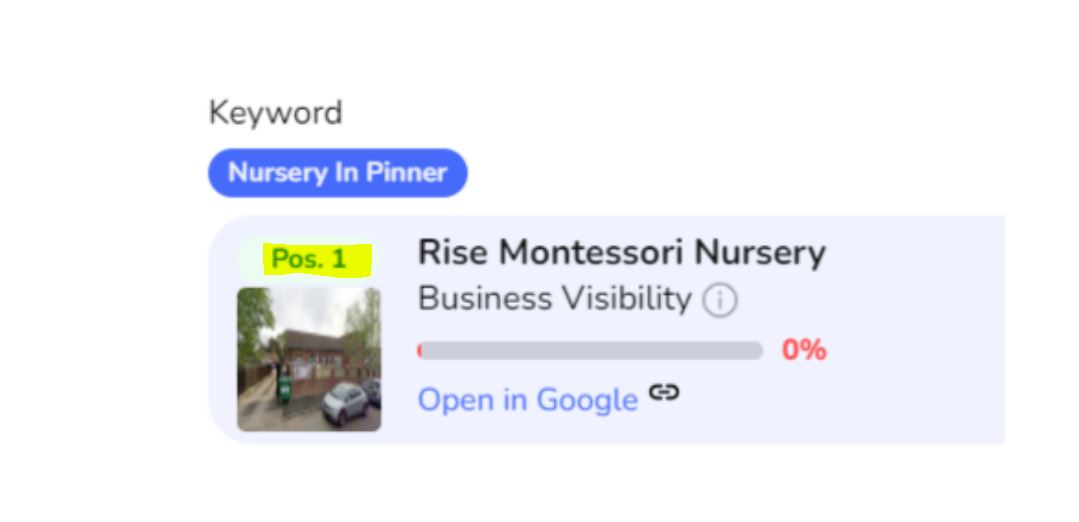
How Rise Nursery Went From Page 2 to #1 on Google in Just 3 Months

When a parent in Pinner searches “nursery in Pinner,” the businesses that show up in Google’s
Local Pack, the map and the three listings underneath it, get the call. Everyone else is
competing for the scraps further down the page. This is the story of how we took
Rise Montessori Nursery from position 18 to position 1 for that exact search,
in three months, against more than 50 competing nurseries.

18 → 1
Google Local Pack position for “nursery in Pinner”
3
Months to reach #1
50+
Competing nurseries in the local market

The challenge: a crowded, competitive market

Ranking for “nursery in Pinner” was never going to be easy. It’s a short, high-intent, highly
local search term, exactly the kind of query a parent types when they’re actively choosing a
nursery for their child. That makes it valuable, and it also means every nursery within a
reasonable radius is fighting for the same three or four visible spots in Google’s Local Pack.

When Rise Montessori Nursery came to Digikestra,
they were sitting at position 18. In practical terms, that meant being invisible: almost no
parent scrolls or paginates far enough to find a nursery ranked 18th. The brief was
straightforward to state and hard to deliver: close an 18-position gap, in a market with more
than 50 competitors, without the marketing budget of a national childcare chain.

Why local SEO matters for nurseries and childcare providers

Childcare is one of the most “local” purchase decisions a family makes. Parents rarely search
generic terms like “nursery” on their own; they search “nursery near me” or “nursery in
[suburb/town],” and they choose from whatever Google’s map and Local Pack put in front of them.
If a nursery isn’t in that top cluster, it is effectively competing for whatever attention is
left over after three or four other providers have already been considered.

This is why local SEO behaves differently
from general SEO. Google ranks local results on three well-documented factors: relevance
(how well a business profile matches the search), distance (how close the business is to the
searcher or the searched location), and prominence (how well-known and well-reviewed the
business is, both online and offline). A nursery can’t move its premises to shorten the
distance, so the real leverage sits in relevance and prominence, which is exactly where our
strategy focused.

The strategy: 6 pillars we used to win the Local Pack

There was no single trick that moved Rise Nursery from 18th to 1st. It was six coordinated
workstreams, run in parallel and reinforcing each other.

1. Google Business Profile optimisation

Verified business name, exact address, correct phone number, the right primary and secondary categories, and complete, accurate operating hours.

2. Active profile management

Responding to every review, prompting satisfied parents to leave feedback, and weaving local search terms naturally into the profile.

3. Local citations

Consistent, accurate name/address/phone listings across the directories and platforms Google uses to validate a business is real and trustworthy.

4. Google Reviews management

A structured, ongoing programme to earn genuine reviews from happy parents, since review volume and rating are a major prominence signal.

5. Local link building

Earning backlinks from relevant local sources (community pages, parenting directories, local press) to build the domain authority that supports rankings.

6. Local content marketing

Regular, locally-relevant content, from nursery updates to event photos, that gives both parents and Google fresh reasons to see the business as active and relevant.

The Google Business Profile checklist

Because the Business Profile carries so much weight in local rankings, this is where the work
started. Here’s a simplified version of the checklist we ran through:

Google Business Profile elements we audited and corrected for Rise Nursery
Profile element What “good” looks like
Business name Exact legal/trading name, no keyword-stuffed additions (a common local SEO mistake, see our guide to SEO mistakes that hurt rankings)
Categories Accurate primary category plus relevant secondary categories, avoiding irrelevant ones added just to “catch” extra searches
NAP consistency Name, address and phone number identical everywhere the business is listed online
Hours Accurate, regularly checked, with holiday hours updated in advance
Photos Recent, genuine photos of the premises, staff and activities, uploaded regularly
Q&A and posts Common parent questions answered proactively; regular Google Posts for updates and events

The 3-month rollout timeline

The six pillars didn’t launch all at once. Foundational fixes came first, so that the authority
and engagement work landing later had something solid to build on.

1

Month 1: Foundation

Google Business Profile fully corrected and optimised, local citations audited and fixed across directories.

2

Month 2: Authority

Local link building underway, local content and updates published consistently, review requests systemised.

3

Month 3: Momentum

Review volume and engagement compounding, rankings climbing steadily, Rise Nursery reaches position 1.

The results

Rise Montessori Nursery moved from position 18 to position 1 in the Google Local Pack for
“nursery in Pinner” within three months, overtaking more than 50 competing nurseries in the
process. The chart below illustrates that overall trajectory.

Illustrative line chart showing Rise Nursery’s Google Local Pack position improving from 18th at the start of the campaign to 1st after three months.

#1
#5
#10
#15
#18


Start
Month 1
Month 2
Month 3


Position 18
Position 1

Illustrative ranking trajectory for “nursery in Pinner.” The start and end points, position 18
to position 1 in three months, are verified; the intermediate curve is a smoothed illustration
of the overall trend, not exact weekly ranking data.

View this chart as a table
Checkpoint Approximate Local Pack position
Start of campaign 18th
End of Month 1 Improving (foundational fixes live)
End of Month 2 Improving (authority-building compounding)
End of Month 3 1st
Before and after: what changed for Rise Nursery
Metric Before After
Google Local Pack position for “nursery in Pinner” 18th 1st
Visibility in the map 3-pack Not shown Featured every relevant search
Competing nurseries in the market 50+ 50+, now led from the front

What other local businesses can learn from this

None of the six pillars above are exotic. What made the difference was doing all of them
consistently, in the right order, for long enough. A few takeaways that apply to any local
business, not just nurseries:

  • Fix your Google Business Profile first. It is the single highest-leverage
    asset in local SEO, and it costs nothing to get right.
  • Reviews are a growth channel, not an afterthought. A simple, repeatable way
    of asking satisfied customers for a review compounds over months.
  • Consistency beats intensity. Rise Nursery’s climb happened over three
    months of steady work, not a single big push. For more on avoiding the mistakes that stall
    this kind of progress, see Common SEO Mistakes That Hurt Rankings.
  • Content still matters locally. Regular, genuine updates about the business
    give Google and parents alike a reason to keep noticing it, as we cover in
    Why Content Is Still King.
  • Local SEO is a long-term asset. Even as search evolves toward AI-driven
    results, the fundamentals of relevance and prominence still apply, see
    Is SEO Still Relevant for Generative AI Search?

Frequently asked questions

What is local SEO, and why does it matter for nurseries and childcare providers?

Local SEO is the practice of optimising a business’s online presence, primarily
its Google Business Profile, reviews, citations and local content, so it ranks well for
searches tied to a specific location. For nurseries, most enquiries start with a local search
like “nursery near me” or “nursery in [town],” so appearing in the Local Pack directly drives
enquiries and enrolments. Learn more on our local SEO services page.

How long does it typically take to rank in the Google Local Pack?

It varies by competition, location and how far behind a profile currently is.
Rise Nursery moved from position 18 to position 1 in three months, but that timeline reflects
this specific market and starting point. A less competitive area, or a profile with fewer
existing issues, can move faster; a highly saturated market can take longer.

What’s the difference between a Google Business Profile and a website?

A Google Business Profile is what appears in Google Maps and the Local Pack,
it’s usually the first thing a prospective parent sees. A website is where they go next to
learn more and get convinced. Both need to work together: the profile earns the click, the
website earns the enquiry.

How many Google reviews does a nursery need to rank well?

There’s no fixed number Google publishes, review count and rating are one of
several prominence signals, alongside citations, links and profile accuracy. What matters more
than hitting a specific number is a steady, ongoing flow of genuine reviews rather than a
one-off push, since that signals an active, trusted business over time.

Can a nursery improve its local rankings without a large marketing budget?

Yes. Several of the highest-impact steps, correcting the Google Business
Profile, fixing directory listings, and asking happy parents for reviews, cost time rather than
advertising spend. A budget helps accelerate link building and content production, but the
foundational work is accessible to nurseries of any size.

Does ranking #1 mean the work is finished?

No. Local rankings are actively contested; competitors run their own SEO,
review profiles fluctuate, and Google’s algorithm evolves. Maintaining a #1 position requires
ongoing profile management, continued review generation and regular content, the same
pillars used to get there in the first place.

How does Digikestra measure local SEO success?

Primarily through Local Pack and organic ranking position for target
keywords, Google Business Profile insights (views, calls, direction requests), review growth,
and ultimately enquiries attributed back to search. Get in touch via our
contact page for a free audit of where your
profile currently stands.

Want results like this for your business?

We’ll audit your Google Business Profile and local rankings, free, and show you exactly where the gaps are.

Get your free local SEO audit

Have questions about local SEO for your business? Visit our full FAQs page
or read more on the Digikestra blog.