

Search engines have always evolved. From ten blue links to featured snippets, voice search to personalised results, the way people find information online has never stood still. But the rise of generative search has sparked a question that marketers, business owners, and content creators are all asking right now: does SEO still matter?
The short answer is yes. But the longer answer is more interesting, and more useful. If you are working with or looking for an SEO agency in London, understanding how generative search actually works will help you invest your efforts in the right places.
What Is Generative Search and How Is It Different?
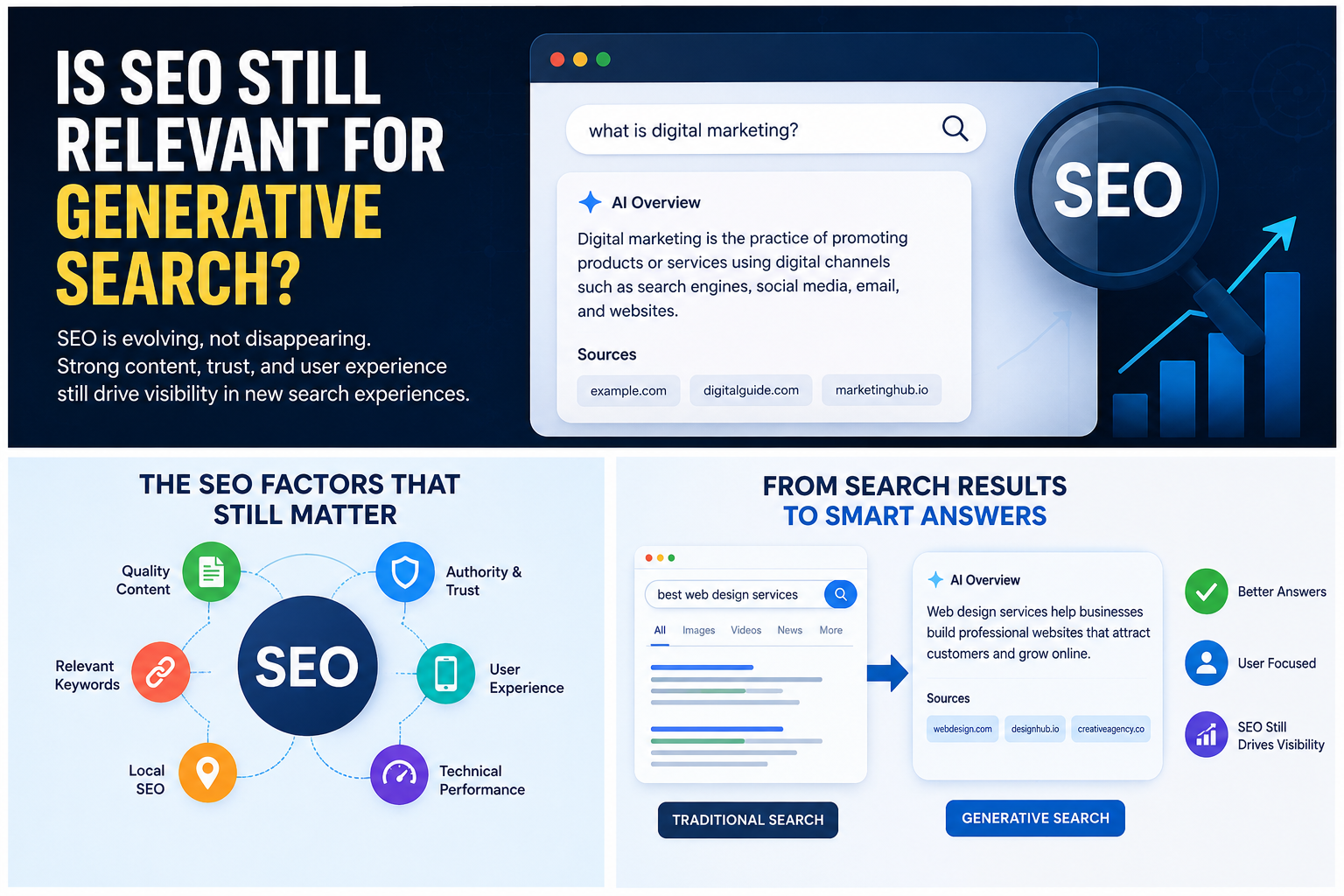
Traditional search returns a list of links. You search, you scan, you click. Generative search does something different. It reads across multiple sources, synthesises the information, and produces a direct answer, often without the user needing to click anywhere at all.
Google’s Search Generative Experience and similar tools from Bing and others are already changing how search results pages look and feel. Instead of ten ranked links, users might see a conversational summary at the top, with source links appearing below or alongside it.
This has understandably made some people nervous about organic traffic. If the answer is served directly on the results page, will anyone click through to your website?
Why SEO Is More Important, Not Less
Here is the thing that gets missed in most conversations about this shift. Generative search does not create information. It pulls from existing content on the web, evaluates its credibility, and surfaces what it deems most trustworthy and relevant.
That means the websites and pages being cited inside these generated answers are the ones that have strong SEO fundamentals behind them. Quality content, strong authority signals, clean technical structure, and genuine topical depth are exactly what gets referenced.
If your content is weak, vague, or poorly structured, generative search will not find it worth citing. If it is well-optimised, well-written, and genuinely useful, it stands a strong chance of appearing not just in traditional results but inside the generated answer itself.
What Changes and What Stays the Same
Some things genuinely are shifting. Here is what you need to think about differently:
- Clicks may decrease for simple informational queries. If someone asks a basic question and gets the answer immediately, they may not visit your site. This is not new, featured snippets have done this for years.
- Brand visibility inside answers matters more. Being cited in a generated response builds awareness even without a click. The long-term brand value of that is significant.
- Content depth now carries more weight. Thin content that exists purely to rank for a keyword has less chance of being picked up as a trusted source. Substance matters more than volume.
- Structured data and schema markup become more valuable. Helping search engines understand exactly what your content contains makes it easier for generative systems to pull from it accurately.
What stays exactly the same:
- The need for a technically sound website
- Building genuine authority in your niche
- Earning quality backlinks from credible sources
- Writing content that actually serves the reader
- Optimising for search intent, not just keywords
The Trust Factor Has Never Been Bigger
One thing generative search has amplified is the importance of trust. These systems are not just looking for pages that mention the right words. They are looking for sources that demonstrate expertise, experience, authority, and trustworthiness.
Google has been signalling the importance of these qualities through its guidelines for years. Generative search has made them even more central to how content gets surfaced and cited.
Businesses that have invested in building real credibility online, through consistent publishing, genuine expertise, and solid technical foundations, are far better placed in this new landscape than those chasing shortcuts.
What Good SEO Looks Like Right Now
If you want your website to perform well across both traditional and generative search, the priorities are clear:
- Create content that answers real questions thoroughly and honestly
- Build topical authority by covering your subject area in depth, not just broadly
- Make sure your website loads quickly, works on mobile, and is easy to crawl
- Use structured data to help search engines understand your content
- Earn links from websites that are genuinely relevant and respected in your space
- Keep your content fresh and accurate, outdated information loses credibility fast
- Write for people first and search engines second, always
The Businesses That Will Win
The shift toward generative search is not a threat to good SEO. It is a filter. It is removing the advantage that used to come from publishing large volumes of low-quality content optimised purely around keywords. It is raising the bar for what it means to be a trusted, visible presence online.
Businesses that have always focused on quality, real value, and genuine expertise will find this transition works in their favour. Those relying on outdated tactics will feel the squeeze.
The role of a knowledgeable SEO partner has not diminished through this change. If anything, it has become more strategic. Getting the fundamentals right, understanding how search intent is evolving, and ensuring your content is genuinely worthy of being cited, these are not simple tick-box tasks.
A Final Word
Search is changing, but the goal of search has never changed. People want reliable, relevant, useful answers. The businesses that provide those answers clearly and credibly will always find a way to be visible, whatever form the results page takes.
SEO is not becoming irrelevant. It is becoming more meaningful.